People no longer click through ten blue links before finding an answer. Today, many users ask questions directly to Google, AI chatbots, voice assistants, and answer engines. Instead of showing only website links, these platforms often provide complete answers within seconds.
This shift has created a new opportunity for website owners, bloggers, businesses, and marketers. If your content is easy for AI systems to understand and trust, it has a better chance of becoming the answer users see first.
This is where Answer Engine Optimization (AEO) comes in.
Unlike traditional SEO, which mainly focuses on ranking web pages, AEO helps your content become the direct answer for searchers. It focuses on creating clear, trustworthy, and well-structured information that answer engines can easily understand.
Whether you run a blog, an online store, a business website, or a news platform, learning AEO can help you stay competitive as search continues to evolve.
Table of Contents
- What Is Answer Engine Optimization (AEO)?
- Why AEO Matters Today
- How Answer Engines Work
- AEO vs SEO: What’s the Difference?
- Types of Answer Engines
- How AI Search Is Changing User Behavior
- Core Elements of a Successful AEO Strategy
- Creating Content That Answers Questions
- Structuring Content for Better Answers
- Continue with Part 2
What Is Answer Engine Optimization (AEO)?
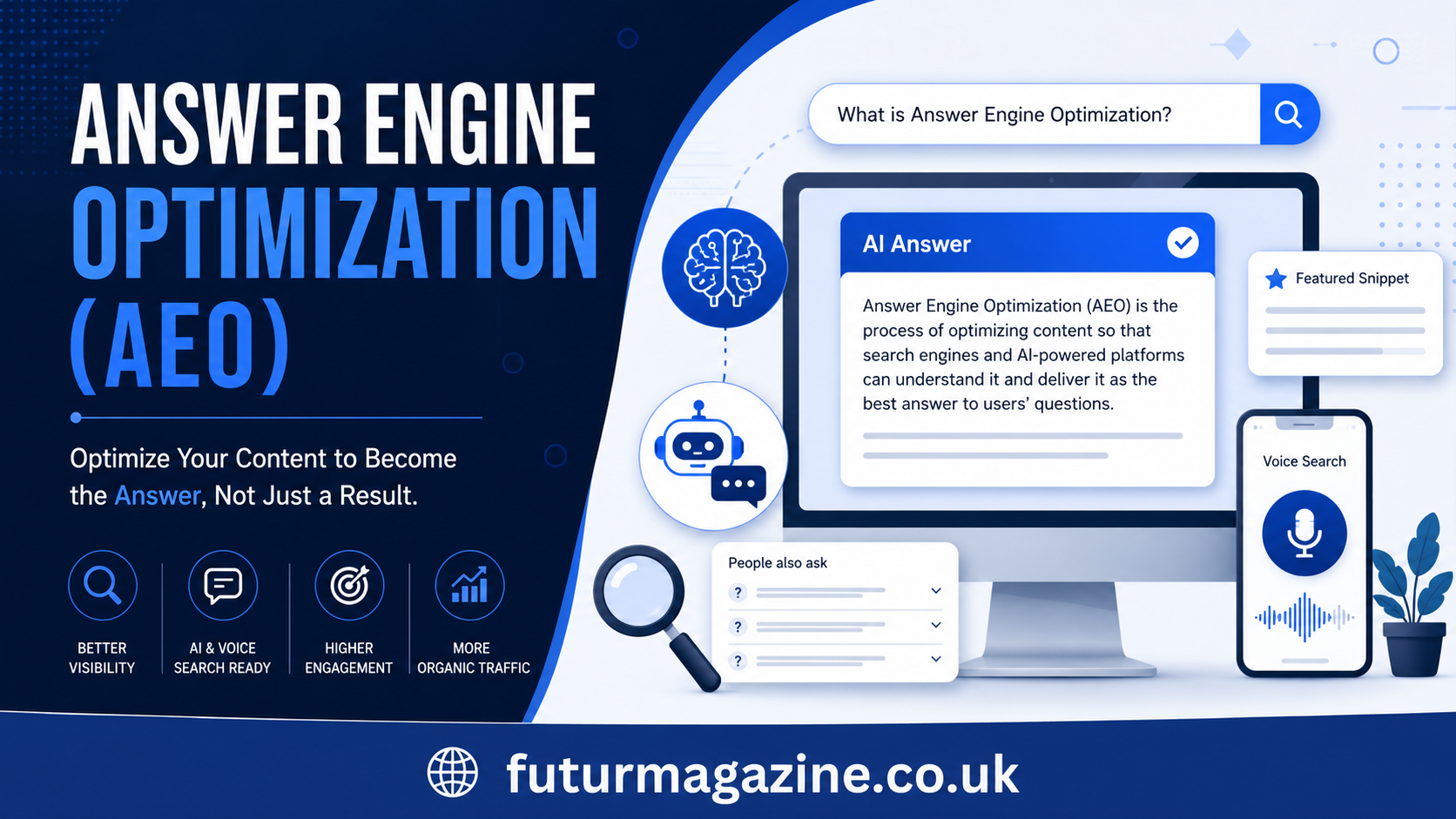
Answer Engine Optimization (AEO) is the process of creating and organizing content so that search engines and AI-powered answer systems can easily understand it and use it to answer user questions.
Instead of focusing only on rankings, AEO focuses on providing the best possible answer.
Modern answer engines look for content that is:
- Accurate
- Easy to read
- Well organized
- Trustworthy
- Up to date
- Relevant to the user’s question
When your content meets these standards, it has a better chance of appearing in:
- Featured snippets
- AI-generated answers
- Voice search results
- Knowledge panels
- AI assistants
Why AEO Matters Today
Search habits have changed dramatically.
People now search using natural language questions like:
- What is Answer Engine Optimization?
- How does AEO work?
- Is AEO better than SEO?
- How can I optimize my website for AI search?
Instead of browsing several websites, many users expect immediate answers.
This means websites that provide direct, high-quality answers have a stronger opportunity to gain visibility.
Some important reasons why AEO matters include:
- AI-powered search is becoming more common.
- Voice search continues to grow.
- Users expect faster answers.
- Helpful content earns greater trust.
- Well-structured pages are easier for AI to understand.
How Answer Engines Work
Answer engines are designed to understand questions rather than simply match keywords.
Their goal is to identify the user’s intent and provide the most useful answer.
A simplified process looks like this:
- The user asks a question.
- The system understands the meaning behind the question.
- It reviews trusted sources.
- It compares different answers.
- It generates or selects the best response.
Because of this process, content quality matters more than ever.
Pages that explain topics clearly often perform better than pages that simply repeat keywords.
AEO vs SEO: What’s the Difference?
Although AEO and SEO work together, they are not exactly the same.
| Feature | SEO | AEO |
| Main Goal | Rank pages | Provide direct answers |
| Focus | Keywords | User questions |
| Success Metric | Rankings | Being selected as an answer |
| Content Style | Comprehensive | Clear and concise |
| Search Type | Traditional search | AI search and answer engines |
The best strategy today combines both SEO and AEO.
SEO helps users discover your content, while AEO helps answer engines choose it.
Types of Answer Engines
Different platforms act as answer engines in different ways.
AI Search Platforms
AI-powered search tools generate conversational answers by combining information from trusted sources.
These systems often summarize information instead of listing only links.
Search Engine Answer Boxes
Search engines frequently display direct answers above traditional search results.
These include:
- Featured snippets
- Knowledge panels
- Instant answers
Winning these positions can significantly increase visibility.
Voice Assistants
Voice assistants usually return only one spoken answer.
That means your content must be extremely clear and trustworthy.
Examples include answering questions like:
- How long should I sleep?
- What is technical SEO?
- How do backlinks work?
Customer Support Answer Systems
Many businesses now use AI-powered support tools that answer customer questions using their website content.
Well-organized help articles improve these systems.
How AI Search Is Changing User Behavior
AI search has changed how people interact with information.
Instead of typing short keywords, users ask complete questions.
For example:
Old search:
- best running shoes
Modern search:
- What are the best running shoes for beginners with flat feet?
This means content should answer detailed questions instead of targeting only short keywords.
Natural language has become increasingly important.
Core Elements of a Successful AEO Strategy
Strong AEO starts with quality content.
The following elements make content easier for answer engines to understand.
1. Understand Search Intent
Before writing anything, understand what users actually want.
Ask questions like:
- Are they learning?
- Are they comparing products?
- Do they need step-by-step instructions?
- Are they ready to buy?
Matching user intent improves relevance.
2. Answer Questions Early
Provide the main answer within the first few sentences.
For example:
What is Answer Engine Optimization?
Answer Engine Optimization (AEO) is the practice of improving content so AI search tools and search engines can easily understand it and provide it as a direct answer to users.
This simple format increases your chances of earning answer boxes.
3. Use Clear Headings
Headings help both readers and AI understand page structure.
Good examples include:
- What Is AEO?
- Benefits of AEO
- Common Mistakes
- Best Practices
Avoid vague headings that provide little context.
4. Keep Paragraphs Short
Large text blocks are difficult to read.
Instead:
- Write 2–4 sentence paragraphs.
- Break complex ideas into smaller sections.
- Use bullets when appropriate.
This improves readability and user experience.
5. Demonstrate Expertise
Readers trust content written by knowledgeable authors.
Support your content by:
- Explaining concepts clearly.
- Using practical examples.
- Updating outdated information.
- Avoiding unsupported claims.
These practices also align with Google’s E-E-A-T principles.
Creating Content That Answers Questions
One of the biggest goals of AEO is answering real user questions.
Start by identifying common questions in your niche.
Then create content that:
- Gives a direct answer first.
- Explains the topic in simple language.
- Provides examples.
- Covers related questions.
- Uses logical formatting.
Instead of writing around a topic, answer the question directly.
For example:
Question: What is structured data?
Answer: Structured data is code added to a webpage that helps search engines better understand its content.
After the short definition, explain the topic in greater detail.
This structure works well for both users and AI.
Structuring Content for Better Answers
Content structure plays a major role in AEO.
A well-organized article is easier to understand than one with random sections.
Follow these practices:
- Use one H1 heading.
- Organize sections with H2 and H3 headings.
- Include numbered steps where appropriate.
- Add comparison tables.
- Use bullet points.
- Write descriptive headings.
- Keep formatting consistent.
Well-structured content improves readability while making it easier for answer engines to identify key information.
Optimizing Content for Featured Snippets
Featured snippets are short answers that appear at the top of some search results. They are designed to answer a user’s question quickly.
AEO and featured snippets share a common goal: delivering the best answer in the simplest format.
To improve your chances of earning a featured snippet:
- Answer the main question in 40–60 words.
- Use descriptive H2 and H3 headings.
- Create numbered and bulleted lists where appropriate.
- Include comparison tables for related topics.
- Define important terms clearly.
- Keep your information accurate and updated.
Example:
Question: What is Answer Engine Optimization?
Answer: Answer Engine Optimization (AEO) is the practice of creating and organizing content so search engines and AI-powered answer systems can understand it and present it as a direct answer to users.
Using Structured Data for AEO
Structured data, also called Schema Markup, helps search engines understand your content more clearly.
While schema does not guarantee better rankings, it can improve how your content is interpreted.
Useful schema types include:
- FAQ Schema
- Article Schema
- HowTo Schema
- Organization Schema
- Breadcrumb Schema
- Person Schema
Choose the schema type that best matches your content instead of adding unnecessary markup.
Optimizing for Voice Search
Voice searches are usually longer and more conversational than typed searches.
For example:
Typed search:
- AEO guide
Voice search:
- What is the best way to optimize content for answer engines?
Tips for voice search optimization:
- Use natural language.
- Answer questions directly.
- Include conversational phrases.
- Write short, clear sentences.
- Focus on local intent if relevant to your business.
Best Practices for Answer Engine Optimization (AEO)
Follow these best practices to improve your content:
- Focus on solving real user problems.
- Cover one topic thoroughly.
- Keep information accurate and current.
- Write in simple, easy-to-understand language.
- Use descriptive headings.
- Add FAQs where appropriate.
- Support claims with reliable sources when needed.
- Improve page speed and mobile usability.
- Build trust with author information and transparent policies.
- Review and update content regularly.
Common AEO Mistakes to Avoid
Many websites struggle with AEO because they make avoidable mistakes.
Common mistakes include:
- Writing for search engines instead of people.
- Stuffing keywords unnaturally.
- Publishing thin or incomplete content.
- Ignoring user intent.
- Using confusing headings.
- Providing outdated information.
- Failing to answer the primary question quickly.
- Publishing without reviewing accuracy.
Avoiding these mistakes helps create more useful content for both readers and answer engines.
Pros and Cons of AEO
| Pros | Cons |
| Improves visibility in AI search | Requires high-quality content |
| Can increase brand authority | Results may take time |
| Supports voice search | Needs regular content updates |
| Enhances user experience | AI search continues to evolve |
| Complements traditional SEO | No guaranteed answer placement |
AEO Checklist
Use this checklist before publishing your content:
- Primary question answered in the introduction
- Clear H2 and H3 headings
- Short, readable paragraphs
- Helpful examples included
- Tables or lists where useful
- FAQ section added
- Natural keyword usage
- Accurate and updated information
- Internal and external links included
- Mobile-friendly formatting
- Fast-loading page
- Author information included
The Future of Answer Engine Optimization
AEO is expected to become increasingly important as AI-powered search experiences grow.
Rather than replacing SEO, AEO builds upon it. Websites that consistently publish helpful, trustworthy, and well-structured content are more likely to remain visible across traditional search, AI search, and voice assistants.
Instead of chasing algorithm changes, focus on creating content that genuinely answers users’ questions. This approach aligns with both Google’s Helpful Content principles and the direction of modern AI search.
Key Takeaways
- Answer Engine Optimization (AEO) focuses on providing direct, accurate answers to user questions.
- AEO complements traditional SEO rather than replacing it.
- Clear headings, short paragraphs, and structured content improve readability.
- Understanding search intent is essential for creating helpful content.
- Featured snippets, AI search, and voice search all benefit from well-organized content.
- Structured data can help search engines better understand your pages.
- High-quality, trustworthy, and regularly updated content is the foundation of successful AEO.
Frequently Asked Questions (FAQs)
1. What is Answer Engine Optimization (AEO)?
Answer Engine Optimization (AEO) is the process of optimizing content so AI-powered search tools and search engines can understand it and present it as a direct answer to users.
2. Is AEO different from SEO?
Yes. SEO focuses on improving search rankings, while AEO focuses on helping your content become the best direct answer. The two strategies work best when used together.
3. Does AEO replace traditional SEO?
No. Traditional SEO remains important for search visibility. AEO enhances SEO by making content easier for AI systems and answer engines to understand.
4. Why is AEO important?
As AI search and voice assistants become more common, users increasingly expect instant, accurate answers. AEO helps meet that expectation.
5. How can I improve my AEO strategy?
Create helpful content that answers user questions clearly, organize it with proper headings, use structured data where appropriate, and keep your information accurate and up to date.
6. What types of websites benefit from AEO?
Blogs, business websites, eCommerce stores, educational platforms, news sites, healthcare websites, and service-based businesses can all benefit from AEO when they publish high-quality, user-focused content.
Conclusion
Answer Engine Optimization (AEO) is becoming an essential part of modern content marketing. As search continues to evolve, success depends on more than ranking for keywords—it depends on providing clear, trustworthy, and helpful answers that users and AI systems can easily understand.
By combining strong SEO fundamentals with AEO best practices, you can create content that serves readers first while improving your chances of appearing in featured snippets, AI-generated responses, and voice search results. Focus on answering real questions, organizing your content effectively, and maintaining accuracy over time. These habits will help your website remain valuable as search technology continues to develop.