Dry socket symptoms are important to recognize if you’ve recently had a tooth removed, especially a wisdom tooth. While mild discomfort after an extraction is normal, severe pain that starts a few days later may indicate a dry socket. This condition, also known as alveolar osteitis occurs when the blood clot protecting the extraction site becomes dislodged or fails to form properly.
Without this protective clot, the underlying bone and nerves are exposed, causing intense pain and slowing the healing process. Although dry socket is not extremely common, it can be very uncomfortable if left untreated.
In this article, you’ll learn about the symptoms of dry socket, why it happens, how dentists treat it, and what you can do to prevent it after a tooth extraction.
Table of Contents
- What Is a Dry Socket?
- Dry Socket Symptoms
- What Causes Dry Socket?
- Who Is at Risk?
- How to Tell the Difference Between Normal Healing and Dry Socket
- Treatment Options
- Home Care Tips
- Prevention
- When to Contact a Dentist
- FAQs
- Conclusion
What Is a Dry Socket?
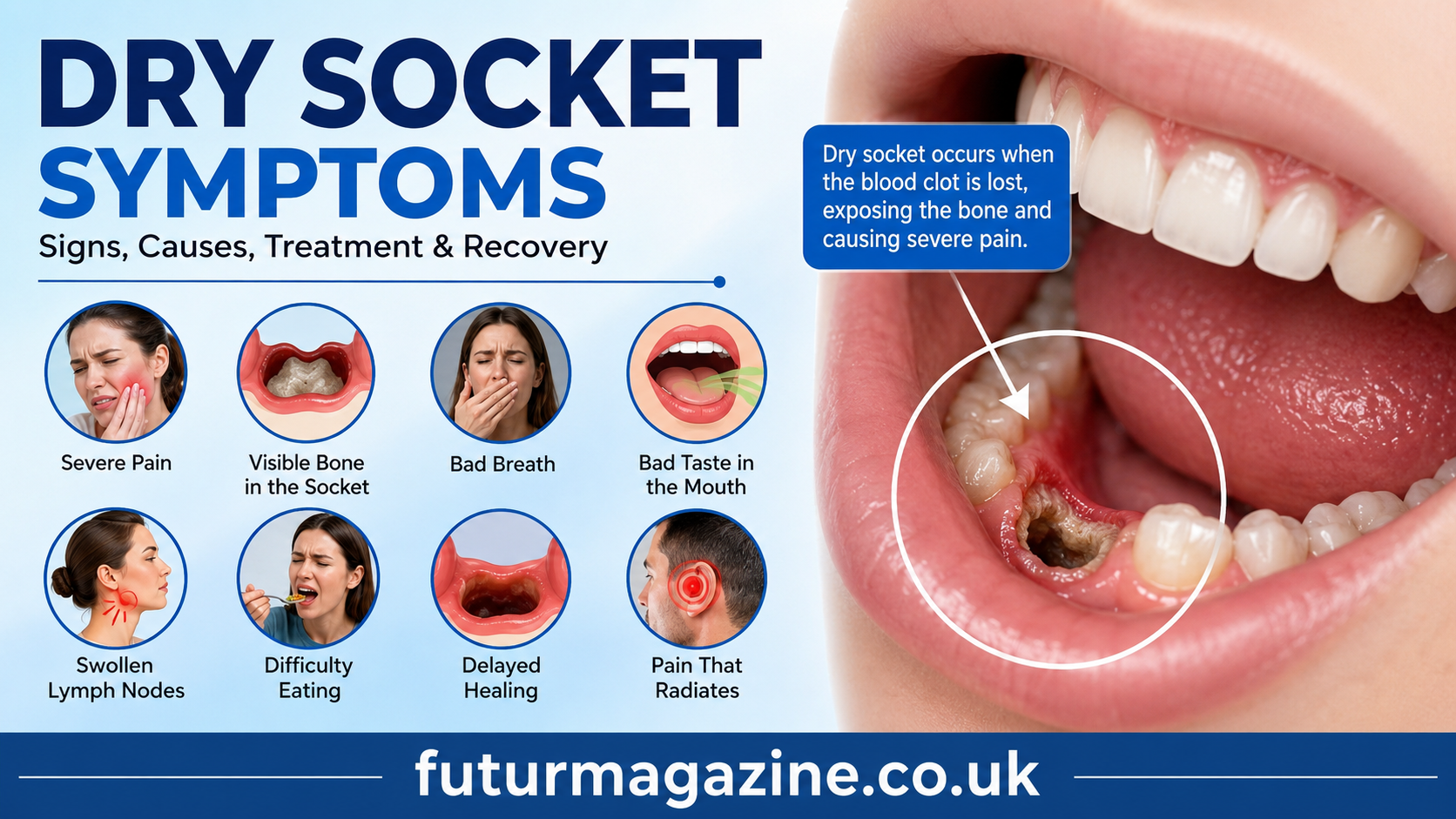
A dry socket is a painful dental condition that develops after a tooth extraction. Normally, a blood clot forms in the empty socket to protect the bone and nerves while new tissue grows.
If this clot is lost too early or never forms, the socket becomes exposed. Food particles, bacteria, and air can irritate the area, leading to severe pain.
Dry socket usually develops 2 to 4 days after the extraction.
Dry Socket Symptoms
Recognizing the symptoms early can help you seek treatment before the pain becomes unbearable.
1. Severe Pain
The most noticeable symptom is intense pain that begins a few days after the tooth extraction.
Unlike normal soreness, dry socket pain becomes worse instead of better.
2. Visible Bone in the Socket
When looking into your mouth, you may notice:
- An empty-looking hole
- White or yellowish bone
- Little or no blood clot
This is one of the clearest signs of a dry socket.
3. Pain That Radiates
The pain doesn’t stay in one place.
It may spread to:
- Ear
- Jaw
- Neck
- Temple
- Eye on the affected side
4. Bad Breath
Many people with dry socket experience unpleasant breath because food and bacteria collect inside the exposed socket.
5. Bad Taste in the Mouth
A foul or bitter taste is another common symptom, especially if bacteria are present.
6. Swollen Lymph Nodes
Some people notice mild swelling in the lymph nodes around the jaw or neck.
7. Difficulty Eating
Because the area is extremely sensitive, chewing on the affected side can become painful.
8. Delayed Healing
Instead of gradually improving, the extraction site appears to stop healing.
What Causes Dry Socket?
Several factors can lead to the loss of the protective blood clot.
Common causes include:
- Smoking or vaping
- Drinking through a straw
- Forceful rinsing after extraction
- Poor oral hygiene
- Infection
- Trauma during extraction
- Touching the socket with fingers or tongue
Who Is at Risk?
Anyone can develop a dry socket, but certain people have a higher risk.
Risk factors include:
- Wisdom tooth removal
- Smoking
- Oral contraceptive use
- Previous history of dry socket
- Poor dental hygiene
- Difficult extractions
- Diabetes
- Existing gum infections
Normal Healing vs. Dry Socket
| Normal Healing | Dry Socket |
| Pain improves daily | Pain becomes worse after 2–4 days |
| Blood clot remains visible | Blood clot is missing |
| Mild swelling | Severe throbbing pain |
| Normal healing progresses | Healing slows significantly |
| Minimal odor | Bad breath and foul taste |
How Dentists Diagnose Dry Socket
A dentist usually diagnoses dry socket by:
- Examining the extraction site
- Looking for a missing blood clot
- Checking exposed bone
- Asking about your symptoms
- Taking X-rays if another problem is suspected
Diagnosis is usually straightforward and doesn’t require complicated testing.
Treatment for Dry Socket
Fortunately, dry socket is treatable.
Cleaning the Socket
The dentist gently removes trapped food particles and debris.
Medicated Dressing
A medicated dressing is placed inside the socket to reduce pain and promote healing.
This dressing may need replacement every few days.
Pain Medication
Treatment may include:
- Ibuprofen
- Acetaminophen
- Prescription pain relievers (if necessary)
Antibacterial Mouth Rinse
Your dentist may recommend an antiseptic rinse to reduce bacteria and prevent infection.
Follow-Up Visits
Most patients require one or two follow-up appointments until symptoms improve.
Home Care Tips
While waiting to see your dentist:
- Rinse gently with warm salt water (only if advised)
- Stay hydrated
- Eat soft foods
- Keep the area clean
- Avoid smoking
- Avoid alcohol
- Don’t poke the socket
- Take pain medicine as directed
Never attempt to pack the socket yourself.
How Long Does Dry Socket Last?
With proper treatment:
- Pain often improves within 24–48 hours.
- Most cases heal within 7–10 days.
- Complete bone healing may take several weeks.
Can Dry Socket Be Prevented?
Yes. Following your dentist’s instructions significantly lowers the risk.
Prevention Tips
- Bite firmly on the gauze after extraction.
- Avoid smoking for several days.
- Don’t use a straw.
- Avoid vigorous rinsing during the first 24 hours.
- Eat soft foods.
- Brush carefully around the extraction site.
- Attend all follow-up appointments.
When Should You Call Your Dentist?
Contact your dentist immediately if you experience:
- Severe pain after the second day
- Visible bone in the extraction site
- Bad smell from the socket
- Persistent bad taste
- Fever
- Increasing swelling
- Difficulty swallowing
- Pus or excessive discharge
Prompt treatment can greatly reduce discomfort and support proper healing.
FAQs About Dry Socket Symptoms
1. What is the first symptom of a dry socket?
The earliest sign is severe, throbbing pain that starts two to four days after a tooth extraction and becomes worse instead of better.
2. How do I know if I have a dry socket or normal pain?
Normal extraction pain gradually improves each day. Dry socket pain intensifies, may radiate to the ear or jaw, and is often accompanied by a missing blood clot and bad breath.
3. Can dry socket heal on its own?
It will eventually heal, but treatment by a dentist can significantly reduce pain, clean the area, and speed recovery.
4. Is dry socket an infection?
No. Dry socket is not usually an infection. It occurs when the protective blood clot is lost, exposing the bone and nerves. However, bacteria can sometimes collect in the area.
5. How painful is a dry socket?
Many people describe it as one of the most painful dental conditions. The pain can spread from the extraction site to the ear, temple, or neck.
6. Does everyone get dry socket after wisdom tooth removal?
No. Most people heal normally after a wisdom tooth extraction. Following your dentist’s aftercare instructions greatly reduces the risk.
7. Can food cause a dry socket?
Food itself does not cause dry socket, but food trapped in an exposed socket can increase discomfort. Gentle cleaning as advised by your dentist is important.
Conclusion
Dry socket symptoms can appear a few days after a tooth extraction and are typically much more severe than normal post-operative discomfort. Signs such as intense throbbing pain, a missing blood clot, visible bone, bad breath, and a foul taste should not be ignored. While the condition is painful, it is highly treatable with prompt dental care.
Following your dentist’s aftercare instructions—avoiding smoking, straws, and vigorous rinsing—can greatly reduce your risk. If you suspect a dry socket, contact your dentist as soon as possible for evaluation and treatment. Early care can provide fast pain relief and help ensure a smooth recovery.